Custom Night Light & Decorative Lighting Manufacturer

Why Crystal Spheres Can Look Flat on a Shelf
A crystal sphere can look deep and detailed in your hand, then surprisingly flat once it is placed on a shelf. The engraving is still there. The inclusions are still there. The color has not changed. What changed is everything around the sphere.
For transparent glass, gemstones, resin orbs and engraved crystal, a stand does more than stop the object from rolling. It changes height, angle, contrast, reflections and the direction from which light enters the material.
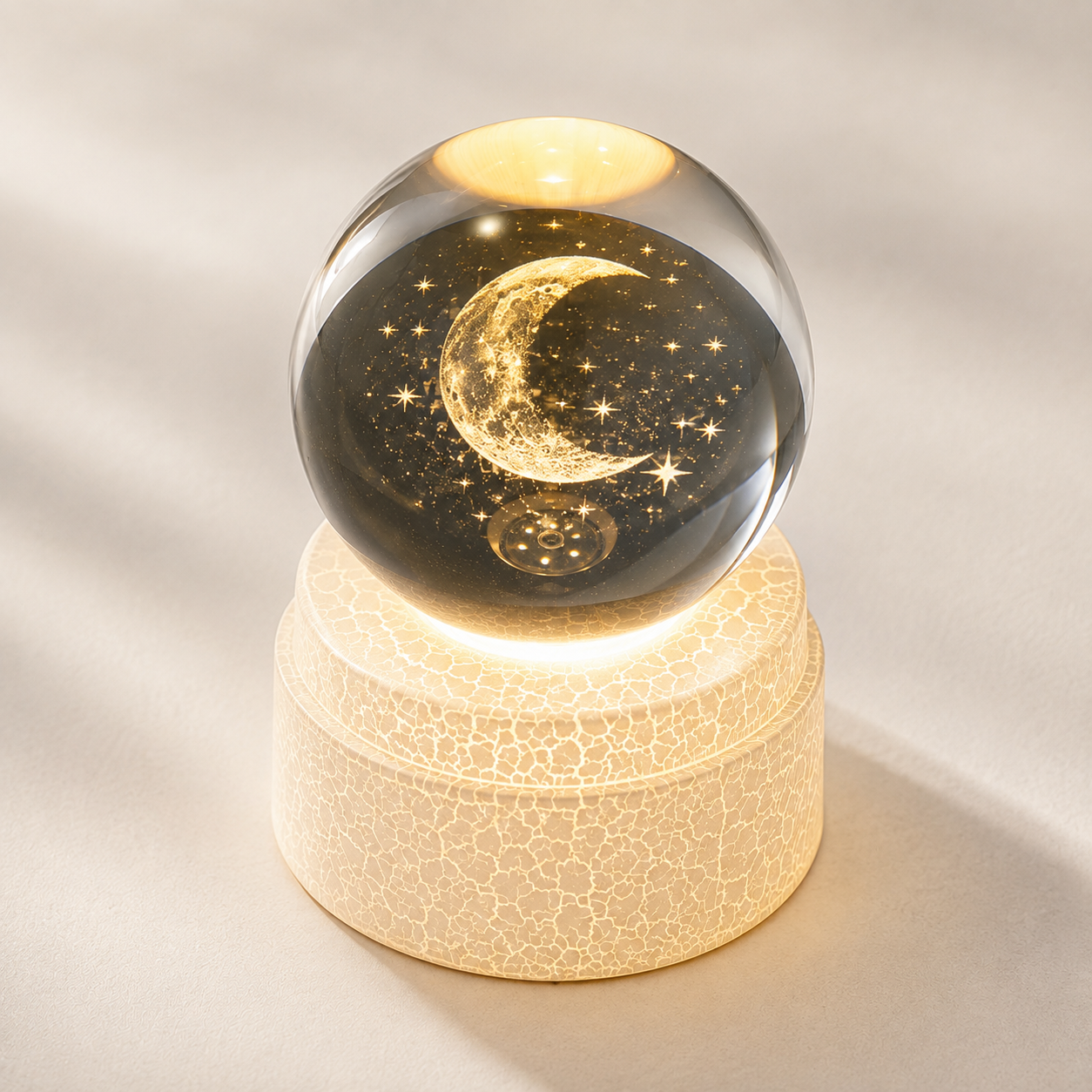
The support changes the silhouette before the light even turns on
A flat object has an obvious bottom. A sphere does not. Even a small change in how it sits can shift the visual center, expose more or less of the lower edge, and move an internal engraving away from the angle where it looks best.
That is why collectors often end up talking about stands almost as much as the spheres themselves. Community discussions regularly mention holders that are too large, too loose, too visible or simply wrong for a particular piece. The problem is not always stability. Sometimes the object is technically secure but visually awkward.
A concave surface can solve the problem quietly
Ring holders and tall decorative stands can work well, but they also become part of the composition. A shallow recess takes a quieter approach: it gives the sphere a place to settle without surrounding it with a large visible structure.
That is the basic idea behind a concave LED sphere base: support the rounded object from below and keep the holder visually simple. Whether a particular sphere actually fits still depends on diameter, curvature, weight and where the two surfaces meet.
A stand can be small enough to disappear beneath the object and still be wrong for it. Fit has to be judged together with proportion.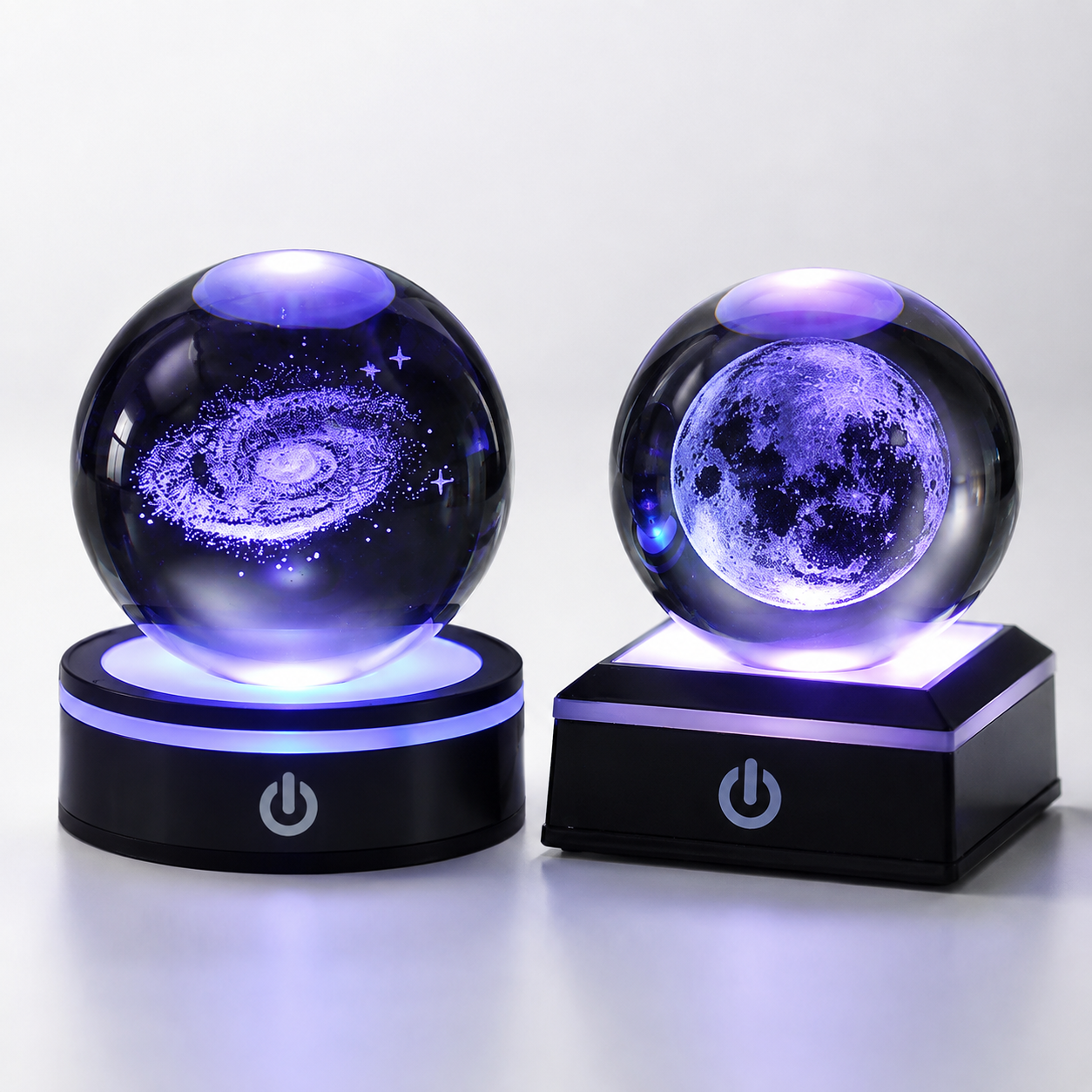
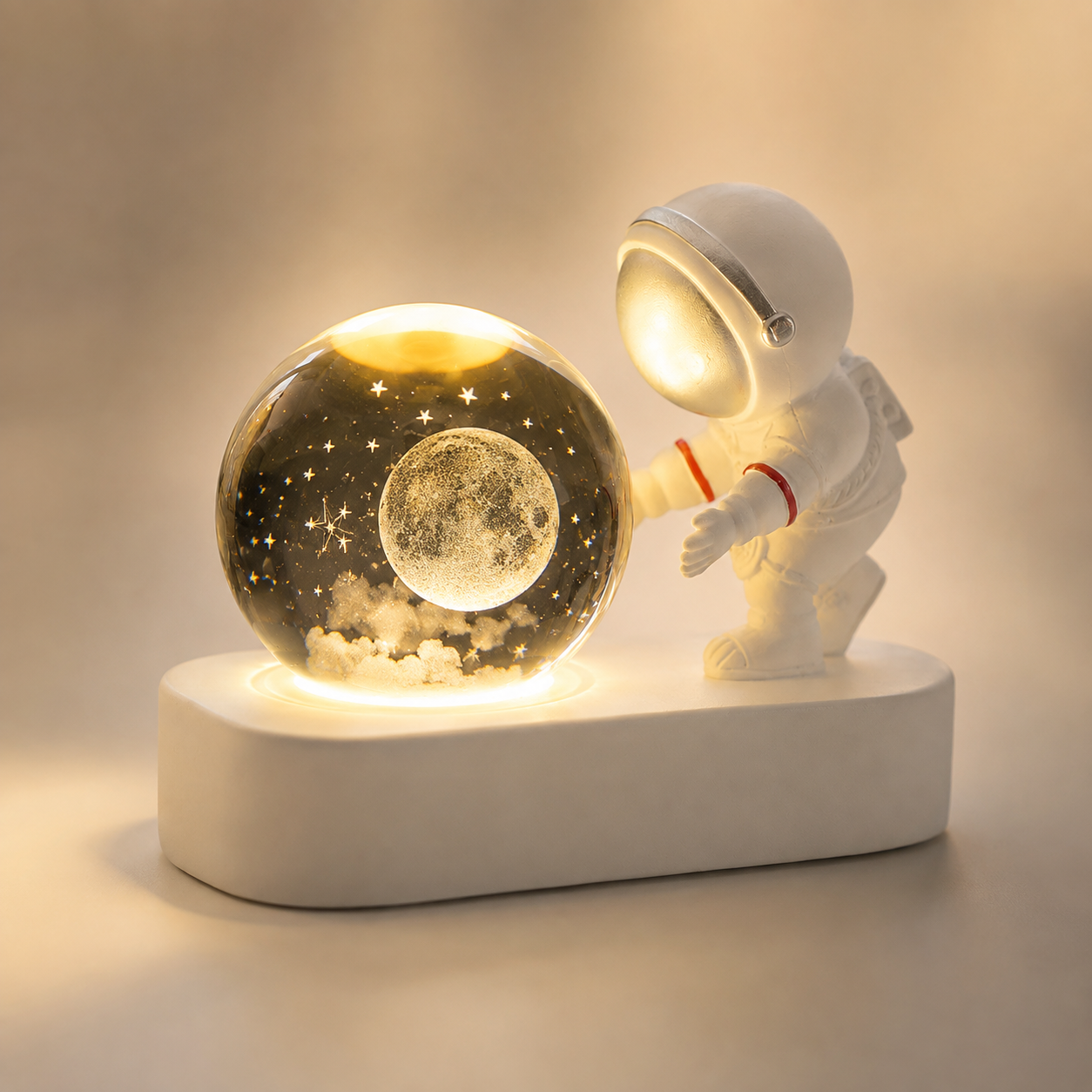
Black works best when it stops asking for attention
Clear spheres can lose their lower edge against pale shelves and white photo backgrounds. Reflections from windows, monitors and walls may already be competing for attention, so a bright or decorative stand can add one more thing to look at.
A dark support does not make the material clearer by itself. What it can do is create a cleaner boundary under the sphere and reduce the visual weight of the stand. In a darker setup, the base may almost disappear, leaving the illuminated object to carry the image.
Lighting from below reveals different information
Front light mainly describes the surface. Light entering from below travels through transparent or translucent material, which can make internal engraving, bubbles, color bands, fractures and resin details easier to see.
But stronger is not automatically better. If the base becomes the brightest object in the frame, the sphere can turn into a glowing color patch and the material itself becomes harder to judge.
White light is often useful when the goal is to show the object more neutrally. Colored light is better treated as mood. The useful question is not how many colors a stand offers, but which light helps the sphere say what the image needs to say.
Small stands are valuable because shelf space is real
Collectors and pop-up sellers often work with limited shelf or table space. Compact sphere holders appear frequently in marketplace listings, and community comments often praise stands that hold an object without taking over the display.
The tradeoff is that compact supports make sizing more important. A base that looks balanced under one sphere can look undersized under another. The stand should be evaluated as part of the object, not as an accessory floating beside it.
Product photography needs both the effect and the truth
Backlighting can transform a dark mineral or heavily included crystal. That makes it useful for showing what the material can do, but it can also create a very different impression from natural room light.
A strong product listing therefore benefits from two kinds of images: one that shows the sphere illuminated, and another that shows the material under neutral or natural light. Recent collector discussions make the same point in a simple way: viewers want to know what a specimen looks like without the dramatic lighting as well as with it.
Those two images answer different questions. One shows atmosphere. The other builds confidence in the object itself.
Too much room light can hide the very detail you are trying to show
Glass reflects almost everything around it. Turning on a ceiling light, two softboxes, a monitor and a window-side lamp may make the scene brighter, but it also gives the sphere more reflections to carry.
If the goal is to show engraving or internal texture, reduce some of the ambient light and let the illumination from below do more of the work. If the goal is to show shape and surface polish, add one soft side light instead of flooding the entire room.
Different materials need different display logic
Clear glass benefits from transmitted light. Laser engraving needs contrast. Mineral spheres may need more side light to show surface texture. Resin pieces with strong internal colors can lose their original palette if colored LEDs dominate the scene.
The same stand can therefore create very different results under different objects. Starting with the material usually leads to a better display than starting with the most dramatic lighting mode.
The best stand eventually disappears from the viewer's mind
A stand becomes noticeable when something is wrong: the sphere leans, the holder blocks too much of the object, the proportions feel off, or the light is stronger than the material.
When support, proportion and light work together, the opposite happens. The viewer stops thinking about the stand and starts looking into the sphere. That is usually the clearest sign that the display is doing its job.